

Single Sitting Root Canal Treatment: Procedure, Benefits, Cost & Recovery
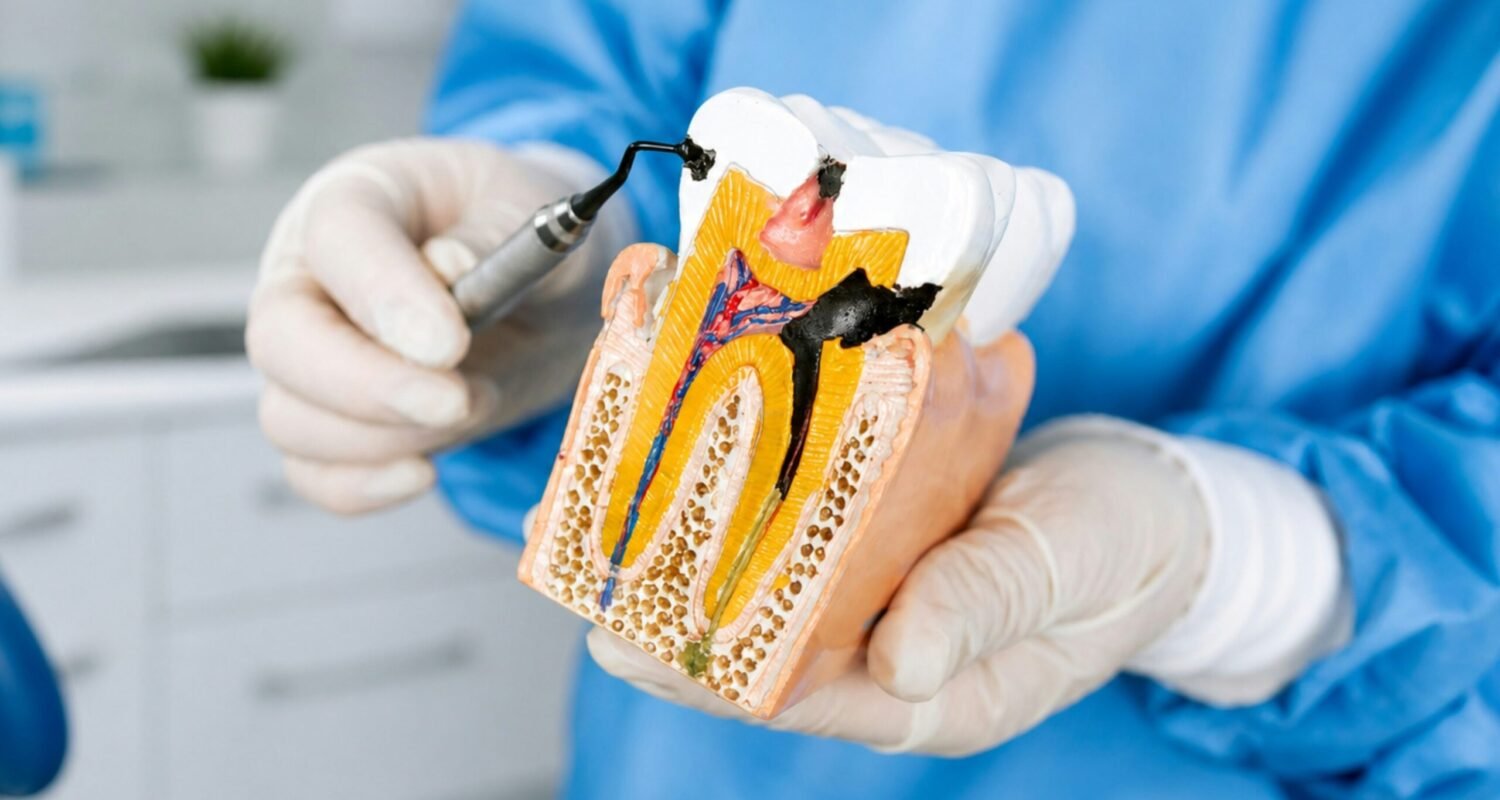
The words “root canal” may make you nervous. If it’s so, you are not alone. Most people are very afraid of multiple dental visits. They also dislike the idea of long recovery times.
Here is the good news. Single-sitting root canal treatment has changed everything. Today’s technology will ensure that your infected tooth is perfect in just one appointment. The dentist can clean, treat, and seal the infected tooth. With one visit, you will walk out with the natural tooth.
There will be less pain in the procedure, and it will save your tooth in just one sitting.
What is single-sitting root canal treatment?
Single-sitting root canal treatment serves as a procedure that requires just one sitting. The dentist removes the infected pulp. They clean the root canals. They seal the tooth. They do everything in just one appointment.
Traditionally, root canal treatment requires two or more visits spread over several days. Sometimes it may also take weeks. Today, rotary endodontics and digital x-rays make the procedure straightforward. They use advanced anesthesia. The cases find completion in just a single sitting. Be assured of excellent results.
Why do dentists recommend single-sitting root canal treatment?
More and more dentists now prefer the single-visit approach. There are plenty of reasons behind the same.
Faster relief from tooth pain
After they complete the root canal, the infected pulp is removed. So you can be assured there won’t be any more pain. Also, you don’t have to keep waiting for the next appointment.
Reduced risk of reinfection
When you temporarily leave the tooth sealed between visits, bacteria have a chance to re-enter. They will finish everything in just one sitting. It will significantly reduce the risk.
Fewer visits with less anxiety
You may experience dental anxiety. In this regard, fewer appointments mean fewer moments of stress. You will have to sit down once. The dentist will do it. And it will be all over.
Modern technology improves success.
Apex locators and rotary nickel-titanium files make the treatment effortless. Also, they carry out digital imaging. It makes one visit treatment. It ensures it is convenient and highly reliable.
Signs you may need a root canal treatment
You will have to watch out for certain warning signals as follows.
- Severe toothache while chewing – It is a classic sign of pulp infection.
- Sensitivity to hot or cold – The sensation may linger longer than a few seconds.
- Swollen or tender gums- You will find it near a specific tooth.
- Tooth turning gray or dark- It serves as a sign of dying pulp.
- Deep decay or untreated cavity- This is the moment where bacteria have reached the pulp.
If you notice any of the certain symptoms, such symptoms, then the dentist will put an end to the issue. Make sure to visit the dentist as soon as possible.
How single-sitting root canal treatment works step by step.
There are certain steps involved in the procedure. This is what you can expect during your appointment. Here we will list down everything that you can know exactly what to expect.
Step 1: Examination and digital X-rays.
The dentist examines the tooth. They take digital X-rays. They assess the infection. They map the shape of the root canals.
Step 2: Local anesthesia and tooth isolation.
They completely numb the location they need to treat with a local anesthetic. They place a rubber dam around the tooth. It keeps it clean and dry throughout the procedure.
Step 3: Cleaning and disinfecting the canals.
The dentist creates a small opening in the tooth. They use rotary files. It removes the infected pulp. They then flush the canals with an antibacterial solution. It eliminates all remaining bacteria.
Step 4: Filling and sealing.
They fill the clean canals with a material that is referred to as gutta-percha. Then they seal it with dental cement. It prevents the infection.
Step 5: Crown placement.
The dentist places a dental crown over the treated tooth. It protects it. It restores full chewing strength. It is the crucial final step for long-term success.
Is Single Sitting Root Canal Treatment Painful?
The honest answer – no, not really.
The infection itself causes the pain. It is not the procedure. Most patients feel little to nothing when the anesthesia takes effect. Many say it feels no different from getting a regular filling.
After the procedure, you may notice mild soreness for 1–3 days, manageable with over-the-counter pain relievers. Modern painless root canal treatment is nothing like the stories you may have heard. Anesthesia and technology have made a world of difference.
Single Sitting vs Multiple Sitting Root Canal Treatment
Feature | Single Sitting RCT | Multiple Sitting RCT |
Number of Visits | One | Two or More |
Pain Relief | Faster | Gradual |
Reinfection Risk | Lower | Slightly Higher |
Best For | Mild to Moderate Infection | Severe Infection |
Overall Cost | Sometimes Lower | Often Higher |
Neither option turns out to be universally better. It depends on the severity of the infection. What else matters is the tooth’s anatomy. The dentist will always recommend what is suitable for the specific case.
When multiple visits are necessary.
Single-sitting treatment is not suitable for everyone. The dentist may recommend multiple visits in the following cases:
- A severe dental abscess or active pus drainage.
- Complex or curved root canals. It is especially common in molars.
- A previously failed root canal treatment. It may require retreatment.
- Persistent swelling. It may need management first.
Success rate and cost of single-sitting root canal treatment
Success rate
Studies show a success rate of 85-95% for single-sitting root canal treatment. However, it is important to take into consideration the proper selection of the case. The treatment by an experienced dentist is a must. Also, what ensures long-term progress is the dental crown and good oral hygiene. Regular checkups play a major role as well.
Cost factors
The cost of the treatment depends on several factors. The tooth being treated plays a role. The front teeth cost less; molars cost more. The severity of the infection affects the price. Whether you need a dental crown or not will play a role. Also, the cost depends on the clinic location and the technology the dentist is using.
A front cost seems slightly higher than one session of a multi-visit treatment, but you can save on repeat consultation fees. Also, you can save on temporary fillings and time off work. It is often the most cost-effective approach overall.
Recovery and Aftercare Tips
Recovery is quick when you follow the dentist’s instructions.
- Eat soft foods. Some better choices are like yogurt and soup. Also, you can consider taking mashed potatoes. Follow it for around 24 to 48 hours.
- Avoid hard, sticky, or very hot foods. This is the time the tooth needs healing, and you cannot eat something hard, sticky, or very hot.
- Brush gently. Make sure to keep up with flossing.
- Avoid smoking. Smoking is responsible for slowing down the healing process. It also raises the infection risk.
- Contact the dentist when the pain worsens after 3 days or if you notice the swelling increases, make sure to contact the dentist.
FAQs - Single Sitting Root Canal Treatment
- Is single-sitting root canal treatment safe?
Yes, it is safe. The right patient must get the treatment from the right trained dentist. Only with that can you be assured that the procedure is safe and reliable.
- How long does the procedure take?
It takes around 60 to 90 minutes. However, the time varies depending on the tooth and the canal complexity.
- Is it possible to get the treatment for all teeth in one sitting?
No, not always. Simple front teeth usually qualify. Complex molars require multiple visits. It is the same with severely infected other teeth.
- How long does a treated tooth last?
When you are having a crown and considering good oral hygiene, a root canal treatment solution lasts around 10 to 25 years or a lifetime.
- Is root canal treatment better than tooth extraction in most cases?
Yes, you can save the natural tooth. It will preserve the bite. It will prevent neighboring teeth from shifting.
Conclusion
Single-sitting root canal treatment in modern dentistry is the best. It is fast, safe, and highly effective.
When you have tooth pain or signs of infection, do not wait. Make sure to act early. You should have the best chance of saving the tooth in one comfortable visit. Talk to the dentist or endodontist today. The natural tooth is worth saving.
