

When should you schedule your next dental check-up?
There is no single schedule that suits everyone. Your ideal recall interval can depend on your oral health, previous treatment and the advice of your dental professional.
Where the six-month figure comes from
Six months is a convention rather than a clinical rule. It became standard because it suits the pace at which problems develop for a person at average risk, and because it is easy to remember. It is a reasonable default, but it is a starting point that should move up or down depending on what your mouth is actually doing.
What shortens the interval
Some patients genuinely benefit from being seen every three or four months. That usually applies if you have active gum disease, a history of repeated cavities, a dry mouth from medication or a medical condition, if you smoke, or if you are wearing braces or aligners where cleaning is harder and changes need monitoring. Diabetes is worth mentioning to your dentist too, because gum health and blood sugar control influence each other in both directions.
What lengthens it
Equally, a patient with healthy gums, no fillings, good home care and a low-sugar diet may be perfectly well served by an annual visit. There is little value in a fixed schedule that ignores your actual risk, and a dentist who knows your history should be able to tell you which group you fall into.
What a check-up actually involves
- An examination of the teeth for decay, cracks and failing older restorations
- Measurement of the gums to detect pockets that indicate gum disease
- A check of the soft tissues of the mouth, tongue and throat
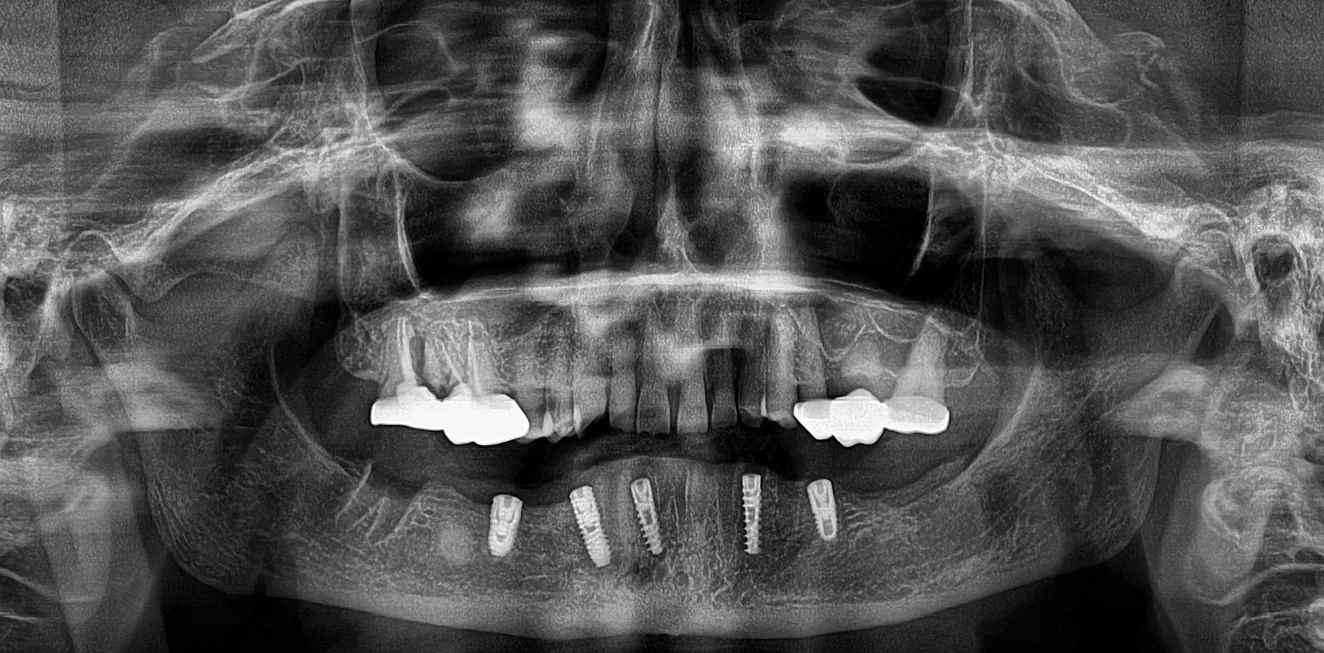
- X-rays when clinically indicated, since decay between teeth is invisible to the eye
- A scale and polish to remove hardened deposits that brushing cannot shift
Do not wait for the appointment if these appear
A check-up interval is for routine monitoring. Pain that wakes you at night, facial swelling, a tooth that has become loose, a broken tooth or a filling that has come out are all reasons to be seen sooner rather than at your next scheduled visit. Swelling in particular should not be left, because a dental infection can spread beyond the tooth.
The economics of turning up
Routine visits are inexpensive relative to what they prevent. A small cavity treated early needs a filling; the same cavity two years later may need a root canal and a crown, or the tooth may not be savable at all. Most of the expensive treatment we carry out began as something small that nobody looked at.
If you are unsure what interval suits you, ask at your next visit to our Vastral clinic and we will give you a straight answer based on your own risk rather than a default.
